
Kimchi
Classic napa cabbage kimchi from scratch: salted, rubbed with gochugaru paste, and fermented to your exact point of sour.
- prep
- 1 h
- cook
- 0 min
- total
- 1 h
- serves
- 20
- level
- medium
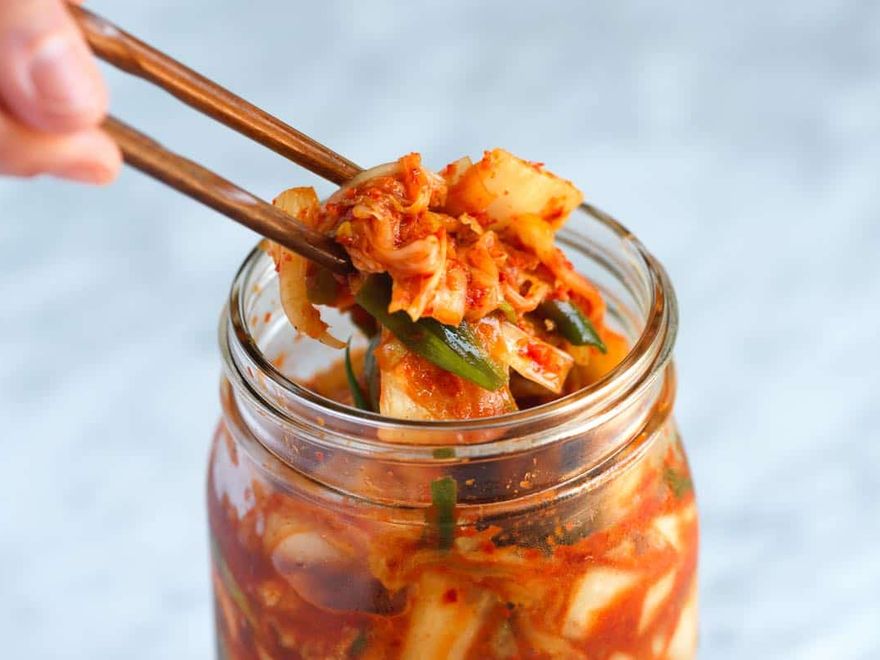
Kimchi is a verb disguised as a noun: you salt, you rub, you jar, and then bacteria do the cooking over days while you taste and decide when it is yours. One batch makes a crock that improves in the fridge for months.
The non-negotiable is gochugaru, Korean red pepper flakes, which are fruity and bright where other chilies are just hot. Everything else bends to taste and tradition.
Kimchi is one of the world's classic dishes from 67 countries.
method
Salt the cabbage quarters between the leaves, submerge in brine made from the remaining salt and water, and weigh down for 4 to 6 hours, turning once, until the leaves bend without snapping. Rinse three times and drain well.
Blend the garlic, ginger, fish sauce, salted shrimp and sugar, then mix with the cooled rice porridge and gochugaru into a paste.
Fold the daikon and spring onions into the paste.
Wearing gloves, rub the paste between every leaf of every quarter, then fold each into a bundle and pack tightly into jars, pressing out air. Leave a quarter of each jar empty.
Ferment at room temperature for 2 to 3 days, pressing the kimchi under its brine daily and letting gas escape, tasting from day one.
When it is as sour as you like, refrigerate. It keeps for months and gets more interesting the whole time.
chef's tips
- Gochugaru only; any other chili makes something, but not kimchi.
- Keep it pressed under its own brine; exposed kimchi is where trouble starts.
- Old sour kimchi is not past it, it is an ingredient: kimchi stew and fried rice are waiting.