
Bibimbap
The Korean rice bowl built properly: seasoned vegetables arranged over rice with marinated beef, a fried egg and gochujang sauce, mixed at the table.
- prep
- 40 min
- cook
- 20 min
- total
- 1 h
- serves
- 4
- level
- medium
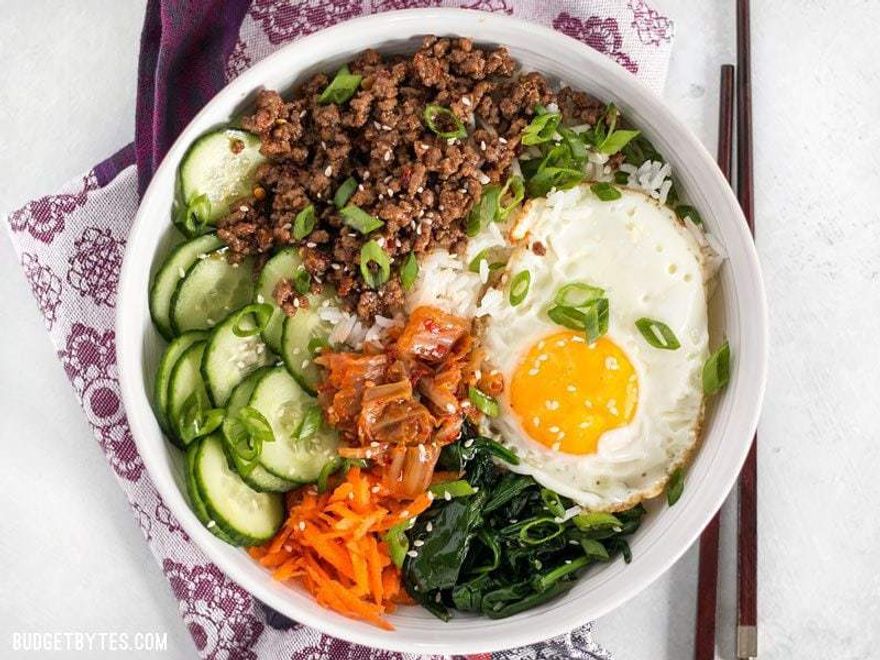
Bibimbap means mixed rice, but the cooking is the opposite of mixing: every vegetable is blanched or sautéed and seasoned on its own, so that when you finally stir the bowl together, each spoonful has distinct things in it.
It looks like restaurant food and is actually leftovers engineering; almost everything can be made ahead and assembled at room temperature over hot rice.
Bibimbap is one of the world's classic dishes from 67 countries.
method
Cook the rice. Marinate the beef in the soy, sugar, a third of the garlic and a tablespoon of sesame oil.
Make the sauce: stir the gochujang with the vinegar, a teaspoon of sesame oil, a teaspoon of sugar and a splash of water until pourable.
Blanch the spinach 30 seconds, squeeze dry, and season with salt, garlic and sesame oil. Blanch the sprouts 2 minutes and season the same way.
Sauté the carrot, zucchini and mushrooms separately, each briefly with a pinch of salt, keeping each pile apart.
Sear the beef in a very hot pan for 2 to 3 minutes. Fry the eggs sunny side up.
Build each bowl: rice, vegetables arranged in wedges, beef, egg on top, sesame seeds. Serve the sauce alongside, and stir everything together at the table.
chef's tips
- Season every vegetable separately. It feels fussy and it is the entire dish.
- Everything except the rice and egg can be made a day ahead; room temperature toppings on hot rice is authentic.
- For dolsot-style crispy rice, press the rice into a hot oiled cast iron bowl or skillet and give it 3 minutes before topping.